The rules one player knows do not always match how another plays. Here are KÜT’s rulings on nine commonly disputed questions alongside the table rule where our sources record one; you can send any ruling to the table with a single tap.
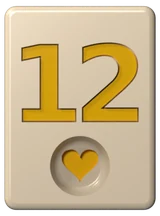
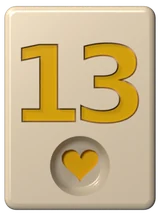
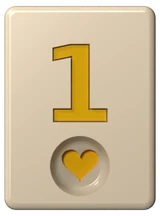
In short: 12-13-1 is a valid run; 13-1-2 is not. You cannot add tiles before you meld or on the turn you meld. Anyone who discards a playable tile or an Okey draws 2 penalty tiles. Anyone who buys a discard out of turn draws one penalty tile. A Küt group has at most four tiles.
Is 12-13-1 a valid run?
Yes. 13-1-2 is not.
Valid: 12-13-1
In the KÜT app
A 1 can follow a 13, so 12-13-1 is a valid run. Runs do not wrap around past 1, which means 13-1-2 is not a valid run.
Written table rule
Pagat’s Okey rules say the same: 12-13-1 is valid and 13-1-2 is not. There is no written exception specific to Küt.
Yes, by replacing it with the actual tile it stands for.
In the KÜT app
You must already have melded, and you cannot take an Okey on the turn you meld. Put the tile the Okey stands for into that group and take the Okey onto your tile rack. The group must remain valid.
Written table rule
The table rule is the same: whoever adds the tile the Okey stands for takes the Okey.
You cannot add tiles to the table or take an Okey on the turn you meld. You may add tiles once your turn comes round again.
Written table rule
The written table rule states that melding stands on its own: first you lay down the contract, and you can only finish the round on a later turn. The sources do not separately mention adding tiles on the melding turn.
To add tiles to groups on the table, you must first meld the contract for that round. Once you have melded, you can add tiles to both your own groups and your opponents’.
Written table rule
Not covered in the sources. Whatever your table agreed on stands.
A player who discards a tile that could be added to a group on the table draws 2 tiles from the draw pile. If every tile on your tile rack is playable or an Okey, you have no choice and there is no penalty; the final tile that ends the round carries no penalty either.
Written table rule
Not covered in the sources. Whatever your table agreed on stands.
Anyone who discards an Okey draws 2 tiles from the draw pile. If you discard the Okey as your final tile to finish the round, there is no penalty and everyone else’s penalty for that round is doubled.
Written table rule
Under table rules, penalties are also doubled when someone finishes with Okey. The sources do not mention a penalty for discarding an Okey mid-round.
If a player buys the discard out of turn, they also draw one penalty tile from the draw pile; the turn order does not change. This is allowed at most 5 times in a round.
Written table rule
If the player whose turn it is does not take the discard, another player may take it by drawing one penalty tile. If two players want the same tile, the one whose turn comes sooner takes it.
A Küt group is made of the same number in different colours, and there are four colours. Two tiles of the same colour cannot sit in the same group, and an Okey cannot be added as a fifth tile.
Written table rule
The table rule also defines a Küt group as the same number in different colours; because there are four colours, it can hold at most four tiles.
If the draw pile runs out before anyone finishes, the round is redealt with no points recorded for anyone; this can happen at most three times in a row.
Written table rule
Not covered in the sources. Whatever your table agreed on stands.
The “In the KÜT app” column comes from the app’s rules engine. “Written table rule” reports only what appears in the sources at the bottom of the page, and states plainly where they do not cover a question. Küt has no single rulebook: if your table has agreed on a different rule, that rule stands.